Why the Bar Is the Most Underrated Design Element at Any Event
When people plan an event, they tend to focus on the obvious design choices:
The venue.
The florals.
The tablescape.
The lighting.
But one of the most influential design elements at any event isn’t usually treated as design at all.
It’s the bar.
Whether you’re planning a Connecticut wedding, a backyard celebration, or a corporate gathering, the bar quietly shapes how your event looks, flows, and feels — often more than any other single element.
Here’s why.
1. The Bar Is Where People Naturally Gather
Every event has gravitational pull. Guests arrive, look around, orient themselves — and then they move toward something. More often than not, that “something” is the bar.
Not because everyone is eager to drink, but because the bar provides:
- a clear destination
- a reason to pause
- a built-in social structure
- a place to stand comfortably
When guests don’t know where to go, they go to the bar. That makes it one of the most socially powerful spaces in the room. If that space feels chaotic, underdeveloped, or tucked away, it affects the entire energy of the event. If it feels intentional and well-placed, it anchors the space.
2. The Bar Impacts Traffic Flow More Than You Think
When planning your layout, you might think primarily about:
- dance floor placement
- table arrangements
- ceremony seating
But bar placement determines:
- where lines form
- where guests cluster
- how easily people move through the room
- whether certain areas feel empty or crowded
A poorly positioned bar can create bottlenecks that ripple through the entire event. A thoughtfully positioned bar supports smooth movement and balanced energy.
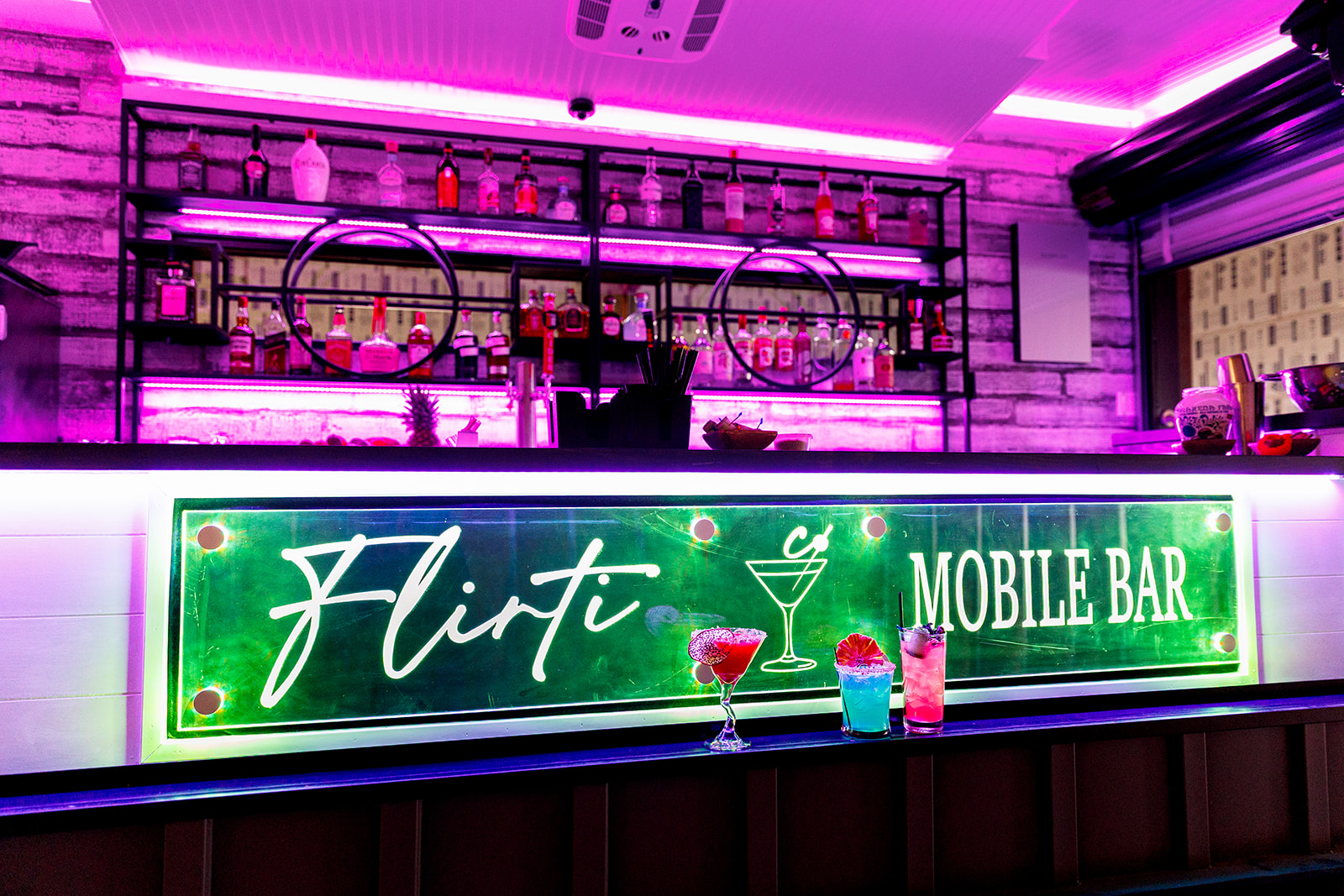
This is one reason many Connecticut hosts opt for a dedicated mobile bar setup rather than relying on improvised venue tables or scattered drink stations — it creates a defined, intentional service zone instead of a temporary workaround.
3. The Bar Is Visually Prominent — Even If You Don’t Plan for It
Even at more formal events, the bar becomes one of the most photographed and visible areas.
It often sits:
- near the entrance to cocktail hour
- along the perimeter of the reception
- centrally within tented spaces
- against key architectural backdrops
If the bar looks like an afterthought — folding table, exposed coolers, cluttered setup — it subtly undermines the aesthetic you worked hard to create. If it’s styled intentionally, it reinforces the tone of the event.
That doesn’t mean it needs to be extravagant. It simply needs to feel cohesive with the rest of your design.
4. The Bar Quietly Sets the Pace of the Night
One of the least discussed aspects of event planning is pacing.
An event has rhythm:
- arrival
- cocktail hour
- dinner
- transitions
- open dancing
- wind-down
The bar is involved in nearly every one of those moments.
Slow service can stall momentum.
Long lines can frustrate guests.
Unclear menus can create confusion.
On the other hand, efficient, well-managed service keeps the energy moving. This is why experienced planners treat bar service as operational infrastructure, not just beverage selection.
A structured mobile bar setup often improves pacing simply because it’s built for consistent flow, not improvised for the night.
5. It’s One of the Few Elements Guests Interact With Repeatedly
Florals are admired once. The cake is cut once. But guests return to the bar multiple times throughout the event.
It’s one of the only design elements people engage with repeatedly.
That repeated interaction means it has disproportionate influence over how the event feels in memory. When the bar is easy, welcoming, and polished, guests feel taken care of. And when guests feel taken care of, everything else feels elevated.
For Connecticut Event Hosts: What This Means Practically
If you’re planning a wedding, backyard celebration, or private event in Connecticut, it’s worth asking:
- Is the bar an afterthought in my layout?
- Does my venue provide adequate infrastructure?
- Will the setup look cohesive with my aesthetic?
- Is service speed being considered — or assumed?
- Is the bar positioned to support flow?
For many hosts — especially at venues without built-in bar facilities — a mobile bar becomes less about “novelty” and more about creating structure.
It gives the bar a defined presence.
It simplifies logistics.
It elevates presentation.
It supports pacing.
And most importantly, it strengthens the guest experience in ways that aren’t immediately obvious during planning — but are very noticeable during the event itself.
The Bottom Line
The most successful events aren’t just beautiful. They’re well-designed in ways guests don’t consciously notice — but deeply feel. The bar is one of those elements.
Underestimate it, and the event works harder than it needs to. Design it intentionally, and the entire experience becomes smoother.